Advertisements

Showing posts with label World History. Show all posts

November 6, 2016

The Hwang -Ho or the Yellow River civilization in China (3500-3000 BC)

The history of the human race covers the entire period since man first appeared on earth. By about 4000 BC the accumulated knowledge and skills of the preceding thousands of years, combined with new discoveries of metals enabled man to live in urban societies. The emergence of this stage was a revolution in human history known as the metal age revolution. It led to the emergence of the first civilizations which are known as River Valley Civilizations. Such river valley civilizations were noted for the effective use of metal implements for Cultivation, weapons and domestic use.
The Bronze Age civilizations which flourished in different parts of the world between 5000 BC and 500 BC were
1.            The Indus Valley civilization or the Harappan culture (3250 to 2750 BC)
2.            The Tigris - Euphrates civilization of Mesopotamia, the modern Iraq (3500 BC to 1000 BC)
3.            The Nile Valley Civilization in Egypt (4000-500BC)
4.            The Hwang -Ho or the Yellow River civilization in China (3500-3000 BC)

The early Chinese Civilization or The Hwang-Ho Valley Civilization
The Hwang-Ho is known as Yellow river because it brings the Yellow alluvial soil and deposits it on its banks. The civilization represents the largest unbroken chain of development known to humanity. The role of rivers Hwang- Ho, and Yang-tze Kiang are significant in shaping the culture, civilization and History of China. The Hwang-Ho is called sorrow of China as its annual floods cause widespread destruction of both possessions and to agriculture. The geography and topography of China caused the civilization to develop in isolation. The Chinese people belonged to the Mongol race. They have yellow complexion, short, oblique eyes, snubbed nose and black hair.

Political History of Ancient China
Fu Xi was the first known king. The Shang dynasty (1766-1122.BC) unified the territories of Yellow river. The succeeding Chou dynasty and its ruler Wu-Wang introduced many reforms and the Chou Age is known as the classical Age of China. After the decline of Chou Dynasty China became disunited and feudal lords reigned supreme. Hence this age is known as feudal age. Shi - Huang -Ti who belonged to Chin dynasty, put an end to the feudal control. He is remembered in history as the builder of the great wall of China. The Chinese honoured the teachings of great philosophers named Confucius, and Lao tze.

Socio- Economic Condition

Advertisements

December 8, 2015

United Nations Organization - Objectives, Organs, Structure and Achievements

The United Nations Organization, an international organization was established in 1945. During the Second world war (in 1941) the American president F.D. Roosvelt and the British prime minister Winston Churchill met on a battle ship and concluded the Atlantic charter. This charter was discussed in various conferences.
It was finally discussed in the San Francisco conference of 1945. The UN charter was signed at San Francisco on 26,h June 1945. As the result UNO came into existence on 24h October 1945. At present UNO has 192 members with its head quarters at New York.

Main Objectives
To maintain international peace and security.
To develop friendly relations among nations.
To settle international disputes by peaceful means.
To be a centre for helping nations to achieve these goals.

Organs of the UNO

Advertisements

Second World War A.D.1939 - A.D.1945 - Causes, immediate cause, opening events, results of war.

Second World War was a global military conflict lasting from 1939 to 1945. The great powers of the world, split up into two opposing military alliances the Allies and the Axis and involved in the war. It was the most widespread war in history. In a state of 'total war' the major participants placed their entire economic, industrial and scientific capabilities at the service of the war effort, erasing the distinction between civilian and military resources. The Treaty of Versailles left many countries dissatisfied. Adverse conditions such as, repartition and unemployment led to new radical ideas, which led to the second world war.

Causes for the Second World War Treaty of Versailles:
The first world war ended by the Treaty of Versailles. It was vindictive in nature and many countries were dissatisfied. According to the treaty, Germany was stamped as an aggressor and levied a huge war indemnity. She had been deprived of several territories which included Alsace and Lorraine. The rich Saar coal mine was given to France for 15 years under free lease license. Her army was reduced. All these humiliating terms against Germany resulted in the Second World War.
 world history for civil service exams and appsc history material for government jobs in andhra pradesh


Spirit of Nationalism

Advertisements

The American War of Independence (1775 -1783)

In the early 16th century, many English Protestants were unhappy with the Church of England. In September 1620, about 100 religious dissenters, who later came to be known as the Pilgrim Fathers, set sail for America aboard a vessel the Mayflower. They hoped to settle in North America and live and worship in peace. Intending to land in Virginia, instead they arrived at the coast of New England after a stormy voyage.
Before they landed, the Pilgrims drew up an agreement, the Mayflower Compact, establishing a government for their colony, which they named Plymouth Plantation. Half the settlers did not survive their first winter in America, but help from the Native Americans helped the colony to eventually flourish. The hospitable Natives helped the settlers to farm crops suited to the land and climate, and also traded goods with them.
In the late 16th and 17th centuries, many English, French and Dutch emigrants went to North America. They supported themselves by cultivating crops that they could sell to England, like tobacco, indigo, and rice. Most of the workers on the plantations were slaves and servants bound by contracts.
By 1733 thirteen English colonies had been founded along the eastern coast of North America, the last being Georgia. The French occupied Canada.
1.      The northern colonies of New England were occupied by Puritans, who had got leave from James I to found an English colony in America. They loved learning and education and were politically more conscious.
 2.       The southern colonies like Georgia and Virginia had large estates having tobacco and cotton plantations worked by slaves.
3.       There were other English colonies like Pennsylvania and Maryland occupied by Quakers and Catholics.
Before the 1750s there were sporadic wars between the English and the French colonists over trade and as an extension of quarrels in Europe. In 1753, the French moved south from Canada to occupy part of the Ohio valley.

Advertisements

Nazism in Germany A.D.1933 - A.D. 1945

Germany, a powerful empire in the early years of the 20th century, fought the First World War (1914-1918) against the Allies (England, France and Russia). Germany made initial gains by occupying France and Belgium. However the Allies, strengthened by the US entry in 1917, defeated Germany and the Central Powers in November 1918.

Defeat of Germany
The defeat of Imperial Germany and the abdication of the Emperor William II gave an opportunity to parliamentary parties to recast German policy. A National Assembly met at Weimar and established a democratic constitution with the federal structure. This republic, however, was not received well by its own people.
The Peace Treaty at Versailles with the Allies was a harsh and humiliating one. Germany lost its overseas colonies and one tenth of its population. The Allied Powers demilitarized Germany to weaken its power. Germany was forced to pay war compensation amounting to £6 billion. The allied armies also occupied the resources rich Rhine land. Many Germans held the new Weimar Republic was responsible for not only the defeat in the war but also the disgrace at Versailles.
The 1929 Great Economic Depression also affected the economy of Germany. The Germans were expecting a great leader to save Germany from this agony. At this juncture there emerged a great leader, Adolf Hitler.

Advertisements

LEAGUE OF NATIONS - Achievements and Causes for Failure

THE LEAGUE OF NATIONS-1920
In the flames of World War I, Europe was consumed. It made the western countries to realize some international organization must be set up to prevent war in future.
On the initiative of Woodrow Wilson, the President of USA, in January, 1919 a Peace Conference was held in Paris and the representatives of forty two countries took part in it. A council of ten with two representatives each from America, Britain, France, Italy and Japan was formed. They worked hard to make the council function well. But Francis Clemenceau of France, Lloyd George of England, Woodrow Wilson of America and Orlando of Italy, played a major role in the conference. The League of Nations was founded on the basis of their ideas.
In the Paris Peace Conference a suggestion was given for the establishment of an organization of nations. It was thought that only such an organization could prevent any future wars in the world. Before the foundation of such an organization, other institutions also came up. They were:-
The League of Nations Society (1915), 
The world League for Peace (1917), and 
The League of free nations Association (1918) and 
the League of Nations Union.(1920)
LEAGUE OF NATIONS for appsc history material
LEAGUE OF NATIONS- Symbol
On the 14th February, 1919 the Peace Conference examined a note on maintaining peace in the world. According to it on January, 20th 1920, the League of Nations was officially founded with its headquarters in Geneva, Switzerland.

Advertisements

First World War A.D.1914 - A.D.1918

The great war known as World War-I made a mockery of the peace and abundance prophesied by the statesmen and scientists of the 19th century. It was called as the World War as it engulfed all the countries of the world directly or indirectly. The war had its impact on the material and non-­material resources of the entire world.
Causes for the First World War Ambition of Germany
The unification of Germany in 1870 made Germany industrially developed. She needed additional markets and raw materials. Her colonies in Africa were not potentially rich as possessed by England and France. Kaiser William II of Germany believed that his country alone was competent to rule the whole world. He could not tolerate the British saying that the sun never sets in the British Empire. Germany needed colonies not only as a sign of her world importance but also for her growing population. In order to protect Germany he increased the strength of the army and stationed a fleet at Heligoland in North Sea. The aggressive policy adopted by the German ruler led to the First World War.

Advertisements

Nile Valley Civilization in Egypt (4000-500BC)

ANCIENT CIVILIZATIONS
The history of the human race covers the entire period since man first appeared on earth. By about 4000 BC the accumulated knowledge and skills of the preceding thousands of years, combined with new discoveries of metals enabled man to live in urban societies. The emergence of this stage was a revolution in human history known as the metal age revolution. It led to the emergence of the first civilizations which are known as River Valley Civilizations. Such river valley civilizations were noted for the effective use of metal implements for Cultivation, weapons and domestic use.
The Bronze Age civilizations which flourished in different parts of the world between 5000 BC and 500 BC were
1.            The Indus Valley civilization or the Harappan culture (3250 to 2750 BC)
2.            The Tigris - Euphrates civilization of Mesopotamia, the modern Iraq (3500 BC to 1000 BC)
3.            The Nile Valley Civilization in Egypt (4000-500BC)
4.            The Hwang -Ho or the Yellow River civilization in China (3500-3000 BC)

The Nile Valley Civilization of Egypt:

Among the four civilizations of the Bronze Age, the civilization of Egypt which flourished in the valley of the Nile, is believed to be the oldest of which systematic records are available. The archaeologists were able to find huge pyramids, the mysterious sphinx, ruins of temples and tombs, furniture and clothing and even well preserved human bodies (Mummies). Egypt is known as the “daughter of Nile”. Herodotus, the greek historian aptly called Egypt, “the gift of Nile". The Egyptian civilization was at its pinnacle of glory about 5000 years ago.

Political Condition

Advertisements

June 26, 2015

Jainism

Jainism and Buddhism in the 6th century B.C. satisfied the need of the time by introducing the most necessary changes. They recognized the realties view of life. Their doctrines of Karma did not accept the belief that man's destiny is being pre-determined by super natural forces. Instead, man's own activities (Karma) determine his future. Hence man can seek salvation not from religious rituals, but by righteous conduct.
 In due course superstitious rituals and priestly dominance crept into the Zoroastrian system. However the Zoroastrian concepts of monotheism and the ongoing struggle between the good and evil, the necessity of humans identifying themselves with the good for salvation, influenced the theologies and philosophies of Judaism, Christianity and Islam.
Jainism was as old as the Rig Veda. It was a revolt against the then existing Brahmanism. The new system wanted to make religion simple and avoid irrational rituals. It gave new socio-religious code of conduct. The Jains claim that their religion derives its tenets from 24 preceptors of different ages. These preceptors are called Thirthankaras. The earliest Thirthankara was called Rishabha. However only the 23rd and 24th Thirthankaras are considered to be historical figures.

The 23rd Thirthankara, named Parsavanath, was a prince who lived 250 years before Mahavira. He became an ascetic and preached four disciplines to his disciples.

Advertisements

March 15, 2015

Summary- FEATURES OF DIFFERENT WORLD CIVILIZATIONS

MESOPOTAMIAN CIVILIZATION
  1. Situated in the valley of two rivers, the Euphrates and the Tigris. J.H Breasted described the area as the “fertile crescent”.
  2. Different groups like the Sumerians, the Amorites, the Assyrians and the Chaldeans ruled.
  3. The form of writing was cunie form.
  4. Epic of Gilgamesh was famous. The code of Hammurabi is the first written code of laws to history.
  5. They were polytheistic in the religion. They worshipped Entil, Shamash, Ishtar, Venus, Marduk, Saturn etc.,
  6. The tower of Babel is one of the wonders of the ancient world. The hanging gardens of Babylon were also another wonder of the ancient world.
  7. The contributions in the field of Astronomy, Medicine and Geometry were noteworthy. The Ziggurat served as an observatory. The Astronomers Nabu and Kidinnu were famous.

EGYPTIAN CIVILIZATION

Advertisements

August 12, 2014

Fascism in Italy A.D.1922 - A.D.1945

Meaning of Fascism
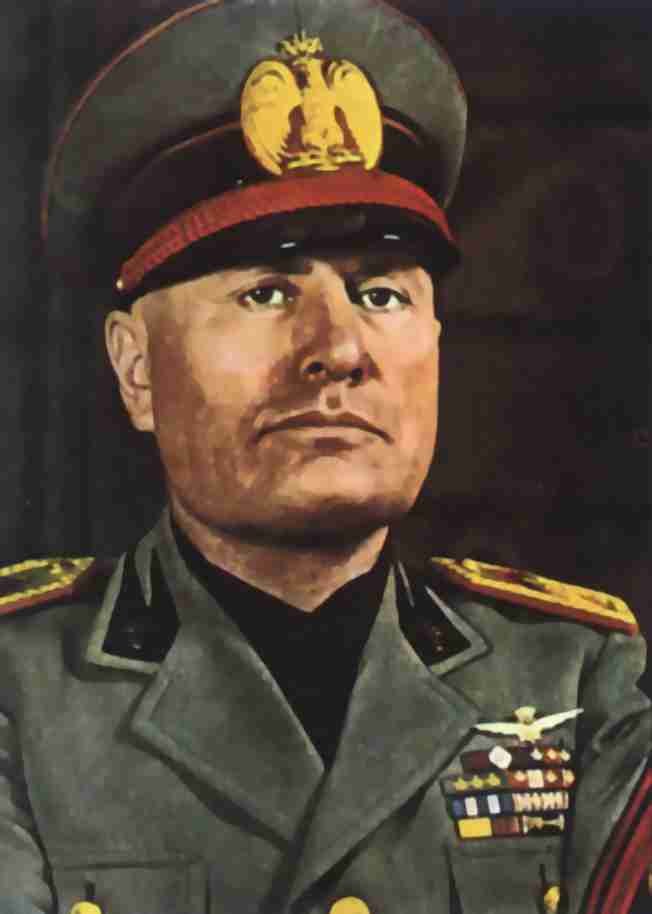
The term '“Fascism" is derived from the Latin word 'Fasces' means a bundle or group. Mussolini of Italy, who is associated with Fascism, organized in the beginning groups of young persons or gangs called the ‘fasces', to create terror among the people who were considered enemies of the nation.
Fascism rests on four pillars of charismatic leadership, single party rule under a dictator, terror and economic control.
Mussolini believed in the efficacy of these slogans and their accompanying action : “Believe, Obey, Fight” and "The More Force, The More Honour*.

Reasons for the emergence of Fascism
The prevailing economic, social and political conditions were very favourable to the rise of fascism in Italy.
Economic crisis
Italy faced with a great economic crisis on account of the huge expenditure incurred on the war. The national debt increased manifold. There was social unrest and economic distress in the country, the prices of essential goods shot up. Cost of living rose very high. Socialism gathered new strength.
There was great dismay and frustration after the Treaty of Paris. Although a victor and constitute of the Allies, Italy did not gain substantially from the spoils of war.
Disruptive activities of the socialists
On account of the revolutionary ideas of the socialist, unrest had spread in the country.
Need for a charismatic leader
The situation demanded a bold leadership and the same was supplied by the fascist leader Mussolini.

Benito Amilcare Andrea Mussolini
Mussolini, Benito (1883 -1945)

Advertisements

August 6, 2014

Roman Empire and its Fall - Medieval Europe

The Medieval Europe: The period from 600 AD on wards till 1500 AD is known as the Medieval age, in European history. It did not begin exactly at the same time in all the countries of Europe. Historians divided the medieval period into two parts. From the beginning of the fall of Roman empire till 1000 AD is called the Early Medieval Age and from 1000 AD to 1500 AD the Later Medieval Age. The beginning of the medieval age is marked by the fall of the Roman empire. The early medieval period has been termed as the “Dark Age”, because chaos and degeneration became prevalent everywhere. The central authority of the government became weaker and exploitation of the common people increased. The medieval age saw the emergence of a new religion Islam, which became internationally important.
On the political front, Medieval Europe saw the rise of the Eastern Roman Empire or Byzantine Empire with its capital at Constantinople. This empire held sway over whole of East Europe till about 1400AD. The Romans proved to be great warriors and conquerors. It was because of their ability and wisdom that strong rulers evinced. After the fall of the Roman Empire in about 800A.D, Emperor Charlemagne established his power over a vast area-comprising modern France, Germany and a part of Italy. This empire lasted till his death and by about 1000 A.D another empire called the Holy Roman Empire was established. Thus towards the end of 14th century, Europe's political map had undergone many changes with many rulers holding power in different parts of Europe at different times. 

Rome was not built in a day. Similarly the decline of the Roman empire was not the work of a sudden or abrupt event but a long-drawn-out process spreading over nearly three centuries. The death of Marcus Aurelius in AD 180 was a turning point in the history of the Roman Empire. The safety, security and integrity of the empire was threatened from within and without. In fact the steady decline of the empire started from the latter half of the second century. Before their final decline in A.D.476 there were many successful emperors like Diocletian (A. D . 2 84-3 0 5) Constantine I the Great (A.D. 306-337) and Theodosius I the Great (A.D.378-395).

Causes for the down fall of the Roman Empire
The decline of the mighty Roman empire of the Caesars was wrought by time and nature, Hurricanes and earthquakes. Fires and inundations reduced the works of ages into dust.
The influx of wealth into the country brought in its wake moral degradation. The Romans lost all their old virtues of discipline and duty to the state.
The growth of the Christian church formed “a state within a state”. In policy and action, the church stood against the empire.
The political mechanism of Rome with her constitution was quite unsuitable to an empire. A corrupt and expensive bureaucracy further worsened the situation. Rome became a big empire and territorially it became vast and impossible to control it. The Romans did not treat their colonial people well. The administration was weak and relaxed. Frequent wars also contributed to her decline.

Advertisements

July 28, 2014

Mesopotamian Civilization

The history of the human race covers the entire period since man first appeared on earth. By about 4000 BC the accumulated knowledge and skills of the preceding thousands of years, combined with new discoveries of metals enabled man to live in urban societies. The emergence of this stage was a revolution in human history known as the metal age revolution. It led to the emergence of the first civilizations which are known as River Valley Civilizations. Such river valley civilizations were noted for the effective use of metal implements for Cultivation, weapons and domestic use.
The Bronze Age civilizations which flourished in different parts of the world between 5000 BC and 500 BC were
1.            The Indus Valley civilization or the Harappan culture (3250 to 2750 BC)
2.            The Tigris - Euphrates civilization of Mesopotamia, the modern Iraq (3500 BC to 1000 BC)
3.            The Nile Valley Civilization in Egypt (4000-500BC)
4.            The Hwang -Ho or the Yellow River civilization in China (3500-3000 BC)

Mesopotamian Civilization
The great Mesopotamian civilization comprises the Sumerian, Babylonian and Assyrian cultures. This civilization flourished in a region between two rivers, i.e, Euphrates and Tigris, hence the name Mesopotamia (meso - in between , potam - rivers; i.e, the land between two rivers). Both the rivers, the Euphrates 2760 kms long and the Tigris 2000 km long, have their source in the mountains of Armenia. The valley between these two rivers is in the shape of crescent and the region is fertile, hence is known as the ‘fertile crescent’. The Garden of Eden mentioned in the Old Testament of the Bible was believed to have been situated within this region. The fertility of the soil and availability of water attracted many tribes to this region. The peculiar feature of the Mesopotamian civilization was its complex character.

Political Life

Advertisements

Zoroastrianism - Intellectual Awakening in 6th Century B.C.

The sixth century B.C. witnessed a great intellectual awakening in various regions of the world . The reformers of all over the world raised their voice against the existing social beliefs and systems and endeavoured to reconstruct them on a rational basis. In Persia, Zoroaster launched his protest against the prevailing religious superstitions and in China, people welcomed the philosophic teachings of Confucius which gave them a higher conception of duties in life. It was an age when people in India were disgusted with old philosophical, religious and social dogmas and were striving for holistic alternatives. The new philosophy of revolt was anti - establishment in form and anti-caste in spirit. The ultimate aim of the revolt was not only spiritual but also materialistic. In due course some of the socio­intellectual movements assumed a religious form. (Example: Jainism, Zoroastrianism, Buddhism.)
The thinkers of the new movements were intellectual philosophers and concerned with life as a philosophy of power and knowledge. In India such thinkers were the wandering teachers (Sramanas). They rejected the authority of the Vedas and Vedic priests, denounced the bloody sacrifices which constituted a very large part of the Religious rituals and they did not make their philosophy and doctrines, god-centric ones.

 Zoroastrianism
Before the advent of Zoroaster, the Persians followed a socio - religious faith that resembled the beliefs and practices of Early Vedic Aryans. At that time they practiced polytheism and worshipped several deities representing natural forces, like Mitra, Varuna, Surya etc; they indulged in costly, bloody and senseless rituals, leading to exploitation of people by priestly class. Polytheistic faith and superstitions obstructed social unity, rational thought and moral life. Greed and selfishness ruined Persian Society.

Advertisements

Greek and Roman Civilization Greek Civilization

The history of the human race covers the entire period since man first appeared on earth. By about 4000 BC the accumulated knowledge and skills of the preceding thousands of years, combined with new discoveries of metals enabled man to live in urban societies. The emergence of this stage was a revolution in human history known as the metal age revolution. It led to the emergence of the first civilizations which are known as River Valley Civilizations. Such river valley civilizations were noted for the effective use of metal implements for Cultivation, weapons and domestic use.
The Bronze Age civilizations which flourished in different parts of the world between 5000 BC and 500 BC were
1.            The Indus Valley civilization or the Harappan culture (3250 to 2750 BC)
2.            The Tigris - Euphrates civilization of Mesopotamia, the modern Iraq (3500 BC to 1000 BC)
3.            The Nile Valley Civilization in Egypt (4000-500BC)
4.            The Hwang -Ho or the Yellow River civilization in China (3500-3000 BC)


Civilization of Europe:

Greek and Roman Civilization Greek Civilization
Greece is situated in the Balkan Peninsula on the south eastern part of Europe, Balkan Peninsula is separated from Asia Minor by Aegean Sea. The early Greeks came and settled in Greece in different groups as Achaeans, lonians and Dorians. They came from the Danube River Valley. Greece is a peninsula washed by the Adriatic, the Mediterranean and the Aegean seas. The main land of Greece is full of rugged mountains. Its crisscross ranges cut up the main land into hundreds of valleys.
One of the significant features of Greek civilization has been their city states. Athens, Sparta, Corinth, Thebes etc. were the important city states in ancient Greece. Each of the city states
had its own government and rulers. Democratic Governments were set up. The city states often quarrelled among themselves. In the end there emerged, two powerful city states of Sparta and Athens. The Athenian democracy reached its zenith during the rule of Pericles. Ultimately the wars and conquests of Philip and Alexander of Macedonia put an end to the city states and Alexander built the first Greek Empire. As a result of this, trade developed between Europe and Asia. During the 2nd Century BC the Romans attacked the Greeks and Greece became a part of the Roman Empire.

Contributions of Ancient Greece to World culture

Advertisements

Feudalism in Medieval Europe

Feudalism
An important feature of the Middle ages was feudalism. The word “Feudalism” is derived from the Latin word “feud” or “fief which means a land held on condition of service. Feudalism was essentially an agrarian system. The peasants or the farmers were obliged to give a portion of the produce from the land to the lords as rent or taxes or they had to work on their Features of Feudalism
Feudalism was an organization of society and its government based on land ownership. According to the system all lands belonged to the king who divided the kingdom into several fiefs and gave each fief to a baron or tenant-in-chief on condition of military and administrative services and other aids to the lord. As the fiefs were granted to bishops and other church dignitaries, they also came under the category of tenants-in-chief. The king in his turn granted protection to them in times of danger. Thus feudalism was a political arrangement in its origin. The baron in his turn subdivided the land into several manors and gave each manor to a sub tenant on similar conditions. Thus the three important features of feudalism were feudal tenure, vassalage and immunity.

Merits of Feudalism

Advertisements

The rise of the papacy in Medieval Europe and its Consequences

Christianity got political support under the Roman Emperors from the days of Constantine. By the 6thcentury A.D the Pope became the head of the church and kings were the rulers of the kingdoms. Sometimes, the Popes were stronger than the king. There in Europe developed a system of dual leadership under the Popes and the kings. Later, this dual leadership led to the rivalries between the church and the state. The Pope was considered as the representative (Vicar) of Jesus Christ. He was the highest authority of the church and was stronger than the kings. They could give directives to the kings and force them to obey their orders.
The papal authority became supreme due to missionary spirit of Christians. In the establishment of papal supremacy, monasteries played a very significant and important role. The character of monks, educational institutions of monasteries attracted the people towards papacy. It made certain valuable contributions.
The rise of the papacy in Medieval Europe and its Consequences
Effects of papacy
In the social life, people became God fearing, began to help the poor, the needy and the deserving. The sense of morality and character as well as dignity developed. Beautiful churches were developed. Religious dogmas and hymns became the themes of literature. In the eyes of the papacy, all the high and the low were equal. With the result it created a sense of equality among all. It was due to papal educational institutions that knowledge developed and also could be passed on to the present generation.

Holy Roman Empire

Advertisements

July 1, 2014

World History for UPSC Civil Service Exams, IAS, SSC CGL, APPSC & Bank PO Exams

World History for UPSC Civil Service Exams, IAS, SSC CGL, APPSC & Bank PO Exams


Index of the Page:

Advertisements

February 19, 2014

Imperialism in China and its END!

Imperialism in China
Certainly it is an interesting thing to study about imperialism in China. The Chinese regarded themselves as superior, and the only truly civilized in the world. The other Asian traders adopted the Chinese culture but not the European traders. Hence the trade with these foreign powers was restricted to the cities of Canton and Macao from 1757 by the Chinese Emperor. But the Europeans were irritated by the Chinese behavior.
To India, the British imported sufficient British goods from England for Indian goods. It avoided them paying in gold. But the Chinese restricted all trades to the specific ports under the supervision of government officials. The Chinese sold tea and coffee to the British but always wanted payment in gold. Over time, the British became worried that huge amounts of gold were ending up in China. So they found out a short cut.
First Opium War A.D 1839-A.D 1842
The British started to grow opium in India and sell it in China. They sold opium for Chinese goods, or even for gold. The Chinese thought that their peace was disturbed by the Europeans. On the other hand European traders were increasingly irritated by the high customs duties they had to pay and by the attempts to curb the growing import trade in opium. By 1800 its importation was forbidden by the imperial government. However, the opium trade continued to boom. The British, who had lions share in opium trade resorted to war in 1839. The warwas called First Opium War.
The Chinese were defeated and forced to sign the Treaty of Nanking in 1842. According to the treaty China gave up the island of Hong Kong permanently to England. It also opened five ports to the British Traders. The English were also given extra territorial jurisdiction in criminal cases.
Imperialism in China
Taiping Rebellion - A.D 1854
The Americans, the French and other foreign countries signed similar treaties with China. The Chinese rebelled against the native Manchu kings and the foreigners in 1854. The rebellion was known as Taiping Rebellion and it was also suppressed.

Advertisements

February 15, 2014

Imperialism - Meaning, Types, Techniques and Causes - With lmperialism in India

Imperialism - Imperialism in India and China
Imperialism: In the late 19th century and early 20th century there was a great upheaval in Europe in their political and economic systems. These European upheavals forced the European nations to extend their authority over the political and economic life of other nations which we call it as imperialism. The word imperialism derives from the Latin word 'Imperium' meaning 'Power'.
The term imperialism refers to the policy of extending a country's rule over the others (or) the aggressive behaviour of one state against another (or) a country's dominant over the political and economic interest of another nation to exploit its natural resources.
Difference between Colonialism and Imperialism:
The policy adopted by the European countries from AD1492- AD1763 is known as Colonialism. During this period England, France, Spain and Portugal established their colonies in the Asian and American continents.
Colonialism refers to the policy of acquiring and maintaining colonies especially for exploitation. It also means that it is a relationship between an indigenous majority and a minority foreign invaders.
Imperialism is a state policy and is developed for ideological as well as financial reasons. Imperialism is the concept while colonialism is the practice.
Imperialism - Meaning, Types, Techniques and Causes - With lmperialism in India
Between A.D 1763-A.D 1870 the European countries were involved in a number of wars and unification movements. After the unification, Italy and Germany began to establish their political and economic powers in Africa and Asia. This policy of imperialism followed by European countries from A.D.1870-A.D 1945 is known as New Imperialism. 

Advertisements

Followers